When you need an air conditioning repair, find a ARS/Rescue Rooter service technician nearest to you or try scheduling service today! Our AC service technicians are standing by in your area, ready to repair your AC immediately.
What to Expect from Our Residential Air Conditioning Repair Technicians
Our Exceptional Service Guarantee means you'll be 100% satisfied with the work we do, or we'll work until you're satisfied with our service
Emergency AC repair services available
No hidden fees and honest cost estimates before work begins
All AC technicians have gone through background checks and drug testing
Flexible financing options available
If your air conditioning is blowing warm air—or not working at all—it's time to call in the experts at ARS/Rescue Rooter for HVAC repair. After all, we're not just talking about an uncomfortable afternoon on a hot day: we're talking about your happiness at home, and a problem that may cause extensive damage to your system if not addressed quickly. ARS/Rescue Rooter is your local air conditioning repair company to help. We have the expertise and experience to determine the extent of AC repairs needed for your home—and we're available 7 days a week. From central air conditioning system repair to ductless mini-split repairs, our technicians have the skills and experience to service any brand, make, and model of your cooling system.
Types of AC Repair and Service We Handle
Your comfort is our top priority, so we'll respond quickly when your AC starts acting up. But don't let our speed fool you: we provide you with quality air conditioner service that gets the job done right the first time. Every repair is backed by our Exceptional Service Guarantee. Our expertise covers every aspect of AC unit repair, including:
AC compressors
AC condensers
Evaporator coils
Air handlers
Swamp/evaporative coolers
Zoned systems
High SEER, high-efficiency options
Air conditioning filters
Air conditioning tune-ups (highly recommended!)
HVAC repair
HVAC services
Before calling to schedule your appointment with our AC repair company, it may be helpful to familiarize yourself with the air conditioning equipment that you have. Make sure you know at least the brand name, the model, and the approximate age of the system, as well as any warranties that may be in effect.
7 Most Common Signs Your Air Conditioner Needs Repair
Your AC won't turn on
Your cooling system is blowing warm or hot air
Your AC short cycles or runs all of the time
Strange smells or sounds are coming from your cooling system
Your air conditioner is leaking
You have cold and hot spots around your home
Your energy bills are increasing month after month (without a reasonable explanation)
If your AC starts doing any of these things, don't hesitate to contact ARS/Rescue Rooter for complete home air conditioning repair service.
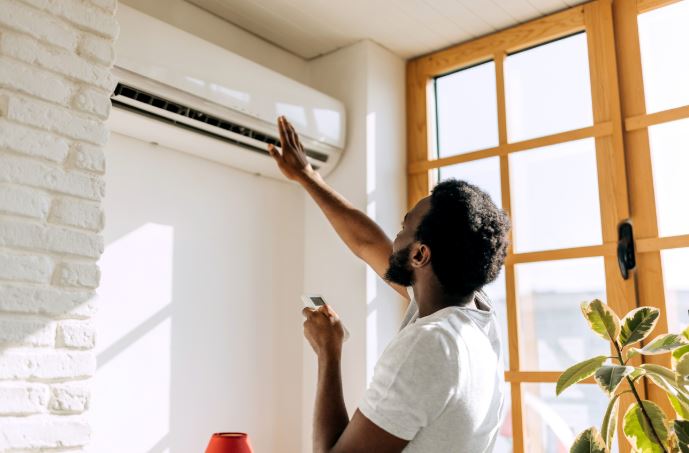
What Troubleshooting Steps Can I Take Before Calling for Central AC Repair Service?
We'd all rather avoid having someone come out to our homes if we can fix it ourselves. There are some DIY tips on your air conditioner you can try before picking up the phone and calling us:
Replace your air filters. Your AC filters may be dirty or clogged, causing your AC system to strain.
Check thermostat settings. Make sure your fan is set to AUTO or ON and the COOL setting is running.
Check the electrical panel. Ensure that your circuit breaker sending power to your unit isn't flipped off.
Survey the outside area surrounding your AC system. Look at the condenser for damages, debris, and dirt that shouldn't be there.
Open all indoor air vents. Check that all vents aren't blocked or obstructed.
If none of these troubleshooting tips provide an easy DIY fix, give ARS/Rescue Rooter a call right away! Our team of technicians is standing by across the country – even on the weekends and over holidays.
How Much Does Air Conditioning or HVAC Repair Cost?
The cost of local air conditioner repair is determined by a variety of factors, including:
The type of repair needed
The condition of your AC system
The level of difficulty of the repair
The necessary parts needed and labor involved to perform the repair
Whether there is an existing warranty or not
We provide a thorough and transparent pricing estimate following an inspection and analysis. You can count on us to never add hidden costs at any point in the process.
A tight budget should not prevent you from obtaining the AC repair services you need. We offer you flexible financing options that work for your budget. Don't sit in the heat any longer! Call ARS/Rescue Rooter now!
How Can I Prevent AC Problems in the Future?
The most important step you can take is to call us for professional maintenance in accordance with the manufacturer's recommended schedule. Another good idea is to make sure you invest in high-quality equipment and parts, as the cheaper you go, the more likely you'll run into issues later.
How Long Do Air Conditioning Repairs Normally Take?
Depending on how complex the issue is and the availability of parts, your repair work could take anywhere from a few hours to a full day or more. When you work with us, we'll do our best to give you the most accurate estimate.
Is Fixing My Air Conditioning System Worth the Trouble?
If the estimated cost of repairs is reasonable and your system is only a few years old, you shouldn't hesitate to have it fixed. Our professionals can help you determine whether it would be better to repair or replace your AC.
What Is the Most Common Type of Air Conditioner Repair?
Most often, issues with air conditioners come down to the compressor, which is what circulates refrigerant throughout the system. Other common repairs include fixing the thermostat, blower motor, or the electrical components.
Could Faulty Wiring Be the Cause of my AC Problems?
Electrical issues are a common cause of problems with air conditioning systems, and faulty wiring can create a serious safety hazard in your home. It is important to have qualified professionals examine your system closely to diagnose your problem as accurately as possible.
Need Help? Call Us Today!
When your air conditioner isn't keeping up, you need a team you can trust to restore your comfort. At ARS/Rescue Rooter, we're proud to provide expert AC repair services backed by decades of experience, professional care, and a commitment to getting the job done right the first time.
Whether you need a fast fix or a full system evaluation, we're here 7 days a week to keep your home cool and comfortable. Schedule your service today and see why homeowners nationwide count on ARS for dependable air conditioning repair. Call ARS/Rescue Rooter at 866-399-2885 today to schedule your air conditioner tune-up with one of our Comfort Advisors.
What Our Customers Say
"Very timely and efficient service. Alex diagnosed the problem with our A/c unit, provided a quote for repair and arranged for one of system consultants to visit with us to discuss a heater replacement." – Dick Persons
"The two young gentlemen who serviced my AC unit today were knowledgeable, professional, and courteous. Highly recommended." – Michael Thomsen
"Brian was great. Clearly explained the potential causes for our issue, promptly fixed the problem, and explained how to maximize the life of the AC unit. He also thoroughly checked the unit to make sure there were no other issues on the horizon. Thanks for a great experience!" – Golan Halley


