
Given its rise in popularity, along with rising energy costs, it’s only natural to wonder, “What is geothermal HVAC?” In simple terms, geothermal HVAC systems move heat between your home and the ground, where temperatures are more consistent than in outdoor air.
According to Energy.gov, “Widespread adoption of these technologies can help to reduce energy costs for families, stabilize the grid, and boost energy security.”
This guide goes beyond explaining “What is a geothermal HVAC system?” to offer a detailed look at how they work, what installing one may cost, the pros and cons, and how to decide if it’s the best choice for your home.
How Does Geothermal Energy Work?
Let’s start with the basics: What is geothermal energy? Geothermal energy is heat from beneath the Earth’s surface. In large-scale energy projects, that heat may come from deep underground resources used for direct heating or for electricity generation. In a home, geothermal HVAC applies that concept through a ground-source heating and cooling system.
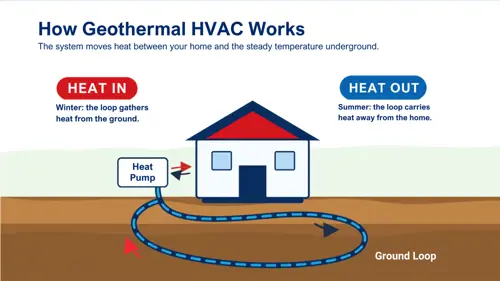
Think of the ground as a thermal battery. It holds a more stable temperature than the air above it, which changes dramatically from season to season. A geothermal HVAC system uses the steady underground temperature to move heat into your home during colder months and out of your home during warmer months.
Geothermal Loop Types Comparison
Loop Type | Best For | What to Know |
|---|---|---|
Horizontal loop | Homes with enough yard space | Often requires trenching and more open land. |
Vertical loop | Smaller lots or properties with limited yard space | Usually requires drilling, which can affect installation cost. |
Pond or lake loop | Properties with a suitable water source | May be efficient, but only works when site conditions allow it. |
Open loop | Some properties with adequate groundwater access | Depends on local water quality, regulations, and system design. |
How Does Geothermal HVAC Work?
So, how does geothermal HVAC work? Instead of relying on fuel combustion or outdoor air, it uses the ground to help move heat into or out of your home. Here’s what happens as the system moves heat between your home and the ground:
Underground fluid circulates: A water-based solution moves through buried pipes called ground loops.
Heat transfers through the ground loop: In winter, the fluid absorbs heat from the ground. In summer, it carries heat away from your home.
The indoor heat pump adjusts the temperature: The geothermal heat pump helps transfer, concentrate, or remove heat so your home reaches the setting on your thermostat.
Conditioned air moves through your home: Your ductwork or air handler delivers warm or cool air to your living spaces.
The thermostat controls the cycle: The system keeps running as needed to maintain steady indoor comfort.
Key Components of a Geothermal HVAC System
A geothermal system has several major parts working together underground and inside your home. The exact setup can vary, but most systems include these core components:
Component | What it is |
|---|---|
Ground Loop | Buried pipes that move fluid through the ground to absorb or release heat. |
Heat Transfer Fluid | A water-based solution that carries heat between the ground loop and the indoor unit. |
Geothermal Heat Pump | The indoor equipment that moves heat into your home for heating or out of your home for cooling. |
Air Handler or Ductwork | The part that distributes heated or cooled air through your living spaces. |
Thermostat | The control point that tells the system when to heat, cool, or shut off. |
Some systems may also include a desuperheater, which recycles excess heat from the system to support water heating.
What Are the Pros and Cons of Geothermal HVAC?
Benefits of Geothermal HVAC
Geothermal HVAC can be a strong option if you’re looking beyond the lowest upfront price and thinking about long-term comfort, efficiency, and reliability. The biggest benefits often include:
Energy efficiency: Because the system transfers heat to and from the ground, it can use less energy than many conventional heating and cooling systems.
Lower monthly utility costs: Better efficiency may help reduce heating and cooling costs over time, especially in homes with high seasonal energy use.
Long system lifespan: Geothermal systems are built for long-term performance, and the underground loop can last for decades.
Eco-friendly operation: Geothermal HVAC systems can reduce the energy needed to heat and cool your home.
Quiet comfort: Most of the system’s operation happens indoors and underground, so it is quieter than many outdoor HVAC units.
Lower maintenance needs: With fewer outdoor components exposed to weather, the system may need less routine maintenance than traditional equipment.
These benefits are a major reason homeowners ask, “Is geothermal HVAC worth it?” For the right home, it can be a smart investment in lower energy use, dependable comfort, and long-term savings.
Potential Drawbacks to Consider
Geothermal HVAC has clear advantages, but it is not the best fit for every home. Before you move forward, it helps to understand the potential tradeoffs:
Higher upfront cost: The cost to install geothermal HVAC is higher than that of many traditional systems due to the equipment, excavation, drilling, and labor required.
More complex installation: A geothermal system requires careful design, proper loop sizing, and an experienced installer to work correctly.
Yard or land requirements: Some systems need enough outdoor space for underground loops, while others may require vertical drilling.
Property limitations: Soil conditions, rock, landscaping, lot size, and equipment access can all affect the practicality of installation.
Not always the fastest payback: Geothermal may only make sense if you plan to stay in the property long enough to benefit from lower energy use over time.
Cost to Install Geothermal HVAC
The cost to install a geothermal HVAC system can vary widely, but the Natural Resources Defense Council says geothermal heat pump installations typically range from $15,000 to $40,000. That is a broad range because geothermal installation is not just an equipment swap.
It often includes system design, underground loop installation, excavation or drilling, indoor equipment, labor, and any updates needed to connect the system to your home.
Several factors can affect your final project cost, including:
Property size: Larger homes usually need more heating and cooling capacity.
Loop type: Horizontal loops may need more yard space, while vertical loops typically involve drilling.
Soil and land conditions: Rock, groundwater, limited access, slopes, and landscaping can affect the difficulty of installation.
Existing ductwork: If your ducts are leaky, undersized, or missing, they may need to be repaired or modified, or new ones added.
System design: Equipment size, loop length, home layout, and local climate all influence the final quote.
Geothermal HVAC systems usually cost more upfront than many conventional systems, but the long-term value comes from energy savings, lower operating costs, and a longer system life.
Interested in Upgrading? Call for a Free Assessment
Cost Factors to Consider for Geothermal HVAC Installation
Cost Factor | Why It Matters |
|---|---|
Home size | Larger homes usually need more heating and cooling capacity. |
Loop design | Horizontal, vertical, pond, and open-loop systems have different installation needs. |
Soil and site conditions | Rock, slopes, groundwater, and access can affect labor and equipment needs. |
Ductwork condition | Leaky, damaged, or missing ducts may need repairs or updates. |
Local labor and permitting | Requirements can vary by area and project scope. |
Is Geothermal HVAC Worth It?
Now that you know what a geothermal HVAC system is, could it be worth it for your home? It may be a good fit if you:
Plan to stay in your home long-term
Want lower energy use and utility costs
Can manage the higher upfront installation cost
Have a property that can support underground loops
Want long equipment life and lower maintenance needs
However, a geothermal HVAC system may not be ideal if you need the lowest upfront price or expect to move soon.
How to Know if Geothermal HVAC Is Right for Your Home
A professional evaluation can help confirm whether geothermal makes sense for your property. Key things to review include:
Outdoor access: Is there room for trenches or drilling equipment?
Budget: Are you prepared for a larger installation project?
Energy goals: Are lower long-term operating costs a priority?
Current system: Is your HVAC system nearing the end of its lifespan?
Ductwork: Can your existing setup support a new system?
Installing a Geothermal HVAC System with ARS/Rescue Rooter
Geothermal HVAC can be a smart long-term upgrade, but the right system starts with the right guidance. ARS/Rescue Rooter can help you compare options, understand your home’s needs, and plan your next step. Call 866-399-2885 today or schedule your service online.
*ARS/Rescue Rooter does not install geothermal systems. Repair and maintenance for existing geothermal systems are available at participating locations only. Call 866-399-2885 to check availability in your area.


